The situation in Ukraine
Since the outbreak of the war in 2022, Ukraine has faced a humanitarian crisis of dramatic proportions: more than one-third of the population requires assistance, civil infrastructure has been heavily damaged, and nearly 70% of residents lack access to water, medicine, heating, or electricity. Internal displacement is estimated at nearly 3.7 million people. In response to this emergency, Van For Life acted from the very first months of the conflict, organizing direct humanitarian aid convoys (mainly food and medical supplies) and coordinating a local distribution network.
For more details on this subject, please refer to this document.
4 years of collective support
2022 – First Emergency Convoys
In the early days of the conflict, confronted with the horror of the situation, Dimitri and Alex Montanini decided to act. They made their company vehicles available, mobilized citizens, raised funds, and collected tons of essential goods. Just weeks after the outbreak of the war, the first convoys were deployed to distribute massive emergency aid. On the return journey, volunteer civilians were brought to Switzerland and hosted by willing families, offering temporary refuge. The scale of citizen mobilization quickly made it necessary to establish a formal structure, giving birth to Van For Life !
By spring 2022, Van For Life sent its first vehicles loaded with medical supplies, warm clothing, and essential goods. The team rapidly established a solidarity supply chain between Switzerland and Ukraine, along with a local distribution network, ensuring aid reached areas close to the fighting; often neglected by larger international organizations.
2023 - Structuring and expanding operations
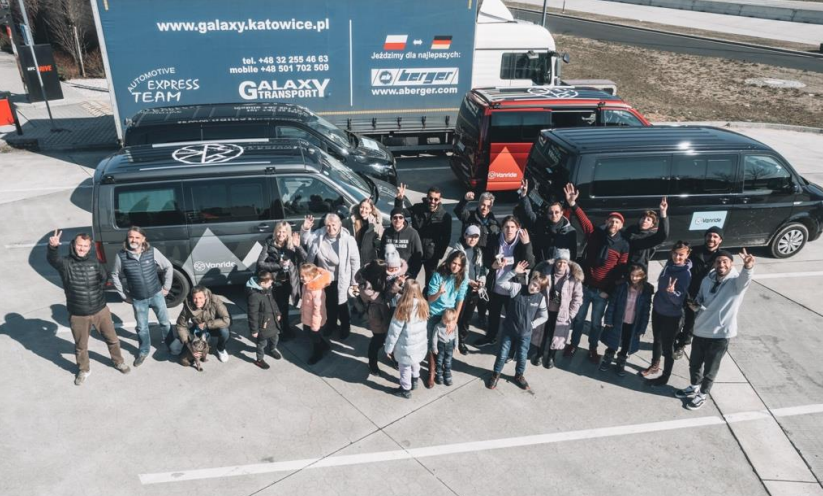
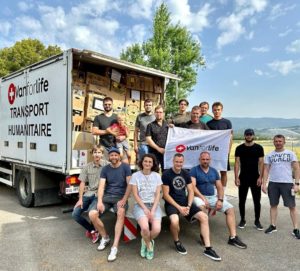
Over the months, the action intensified and professionalized: convoys became regular, occurring 1–2 times per month, supported by a fleet of four vans and a truck. Aid was pre-sorted by teams in Switzerland and then distributed directly in Ukraine, under the supervision of a refugee doctor based in Geneva. Partnerships and support grew, particularly with local associations and Swiss institutions, enhancing efficiency and optimizing resources.
2024 – High-Impact Projects : Demining and Healthcare
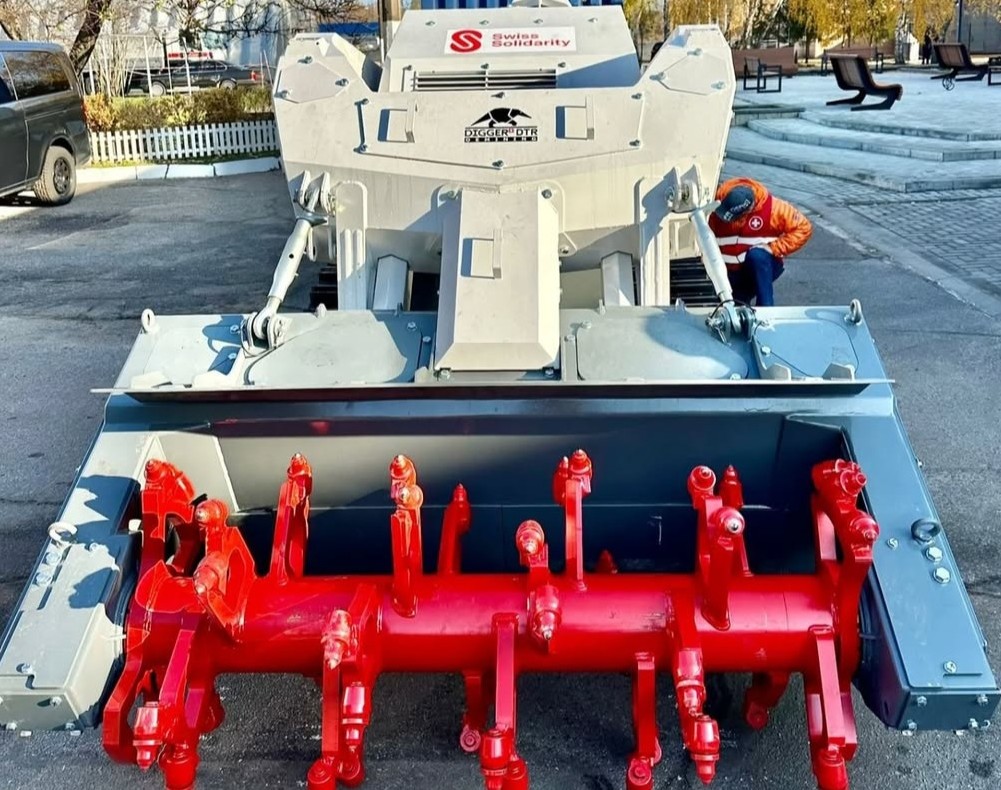
In 2024, the NGO reached a major milestone by collaborating with the Digger Foundation and the Swiss Confederation (DDPS). Together, they delivered two demining machines valued at CHF 2.4 million, accompanied by a trailer truck and a three-year stock of spare parts. This initiative directly contributed to securing rural areas still heavily contaminated with mines and unexploded ordnance. Ukraine is now considered the most mined country in the world.
Meanwhile, humanitarian convoys continued supplying hospitals and rural clinics with medical equipment, providing vital support to the population. Thanks to vehicles left on the ground and a robust organization of volunteers and local partners, distribution remained geographically broad, targeted, and adapted to needs.
The supply chain initially established between Switzerland and Ukraine evolved over the months and partnerships, and now operates between Norway and several Ukrainian locations: Kyiv, Kharkiv, and Dnipro. This evolution is due to a group of partner associations and governmental institutions contributing large quantities of medical supplies (80%) and food/equipment (20%). On arrival, materials are sorted by Van For Life field teams in warehouses. Under the supervision of a Ukrainian doctor, they are loaded into four vans and one truck and distributed according to priority needs.
2025 - Sustained Convoys and Training
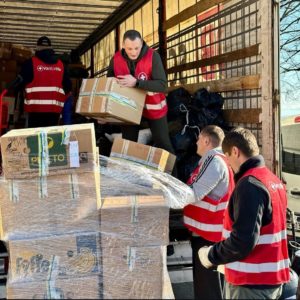
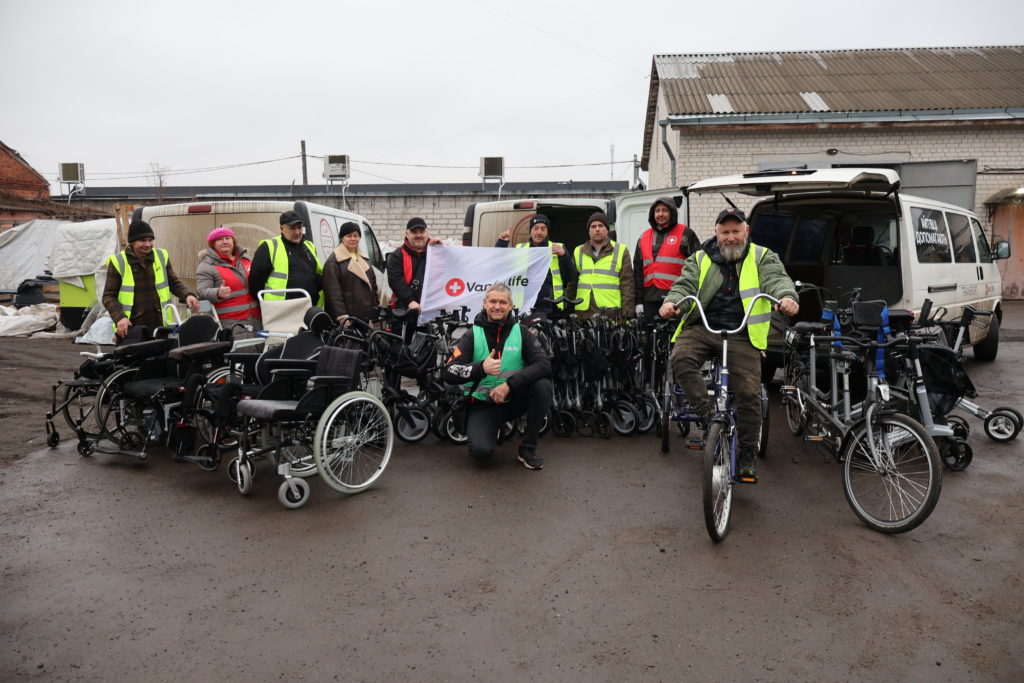
In 2025, our activities in Ukraine continued in line with previous years. Our vehicles remain on the ground, our partners fully mobilized, and needs as urgent as ever. Despite reduced resources, we maintained an active presence from Kyiv and Kharkiv, transporting and distributing over 80 tons of aid directly to those most in need, particularly in isolated rural areas.
This aid, delivered through 177 distributions, supported 11 stabilization centres, 29 social and community structures, as well as many vulnerable families. Local infrastructure was also equipped for firefighting, with 20 tons of dedicated equipment.
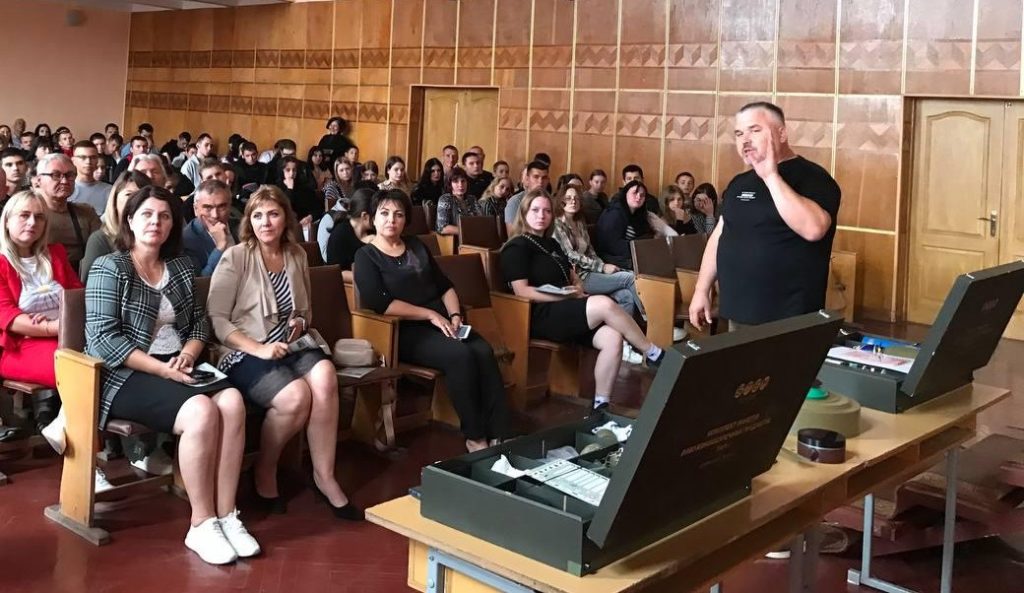
At the same time, 42 mine risk awareness sessions were conducted across 13 regions of the country. More than 1'100 participants (including professionals, local communities, students, and civilians) were reached.
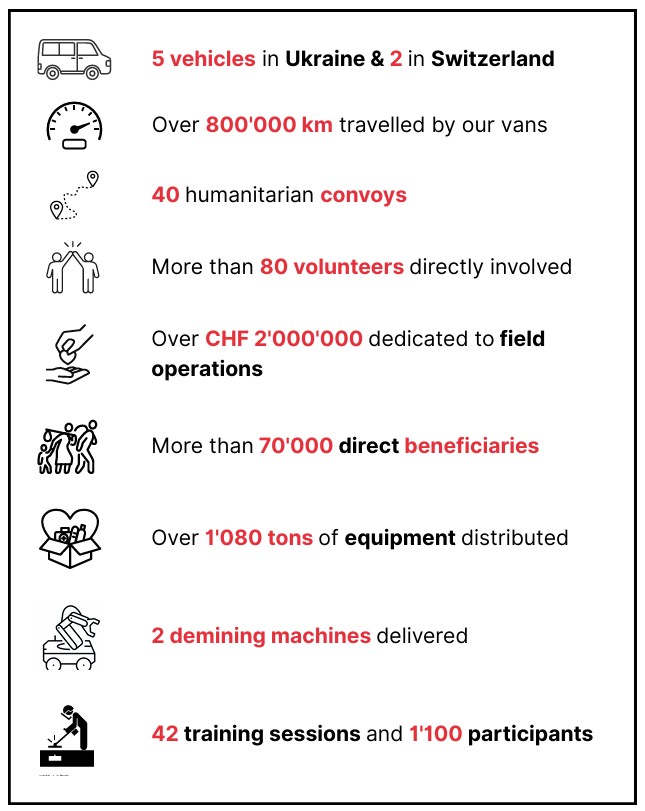
Impact of our activities (2022-2025)
These actions would not have been possible without the commitment of our field partners, our volunteers, and our partners in Norway, whose support is essential in enabling the delivery of this vital equipment.